
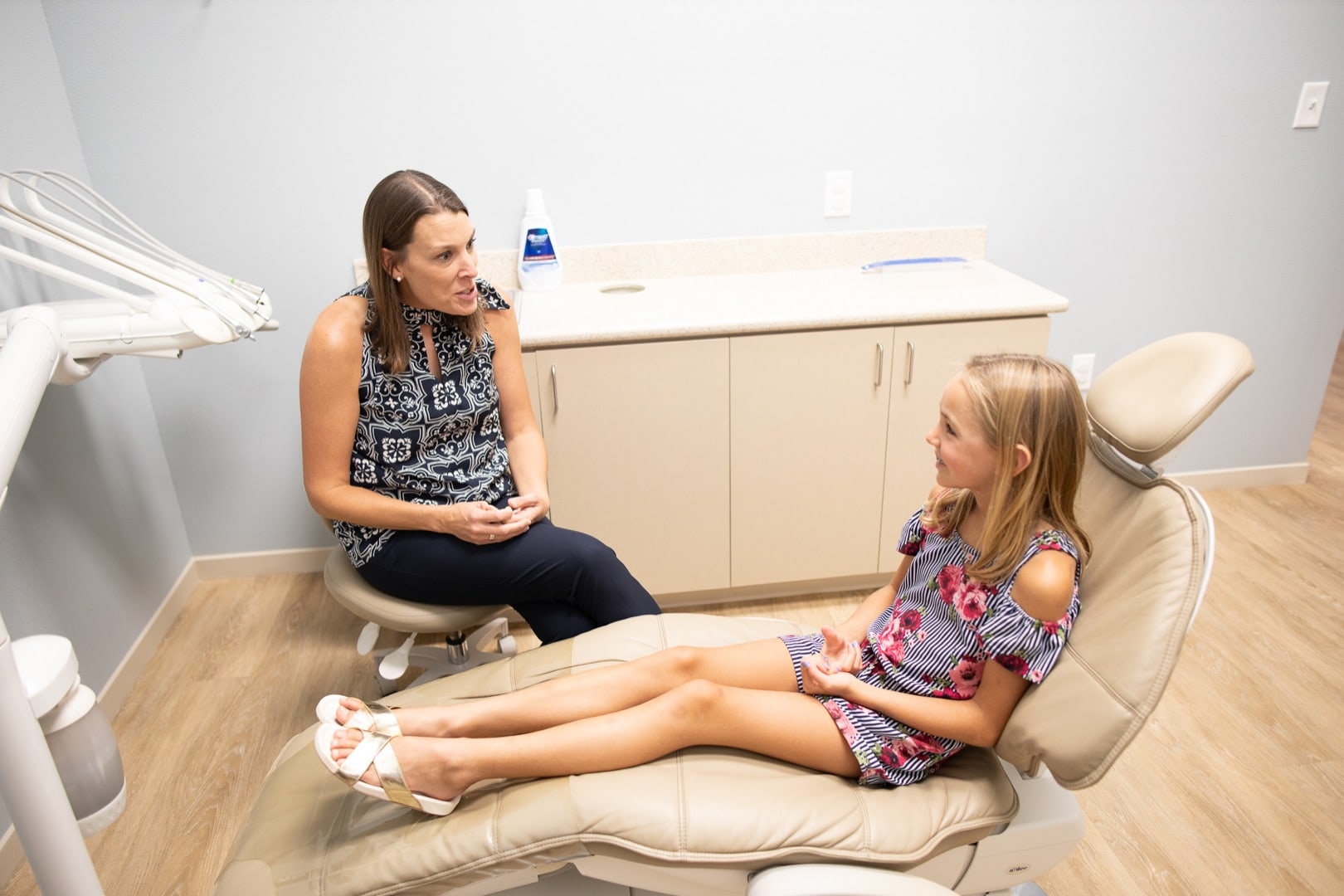
You’re helping your child brush their teeth and spot something unexpected. A new tooth is coming in behind a baby tooth that hasn’t fallen out yet, and your kid suddenly looks like they have two rows of teeth. It’s startling to see, and your first instinct was probably to worry. That’s completely normal. The good news is that this is one of the more common things we see in young patients, and it almost always resolves on its own.
Here’s what’s happening and what you need to know.
What Are Shark Teeth in Kids?
“Shark teeth” is the nickname for adult teeth that come in behind baby teeth before the baby teeth have fallen out. The name comes from sharks, which naturally grow multiple rows of teeth. In kids, it most often shows up with the lower front teeth between ages 5 and 7, though it can happen with other teeth too.
Normally, the roots of baby teeth gradually dissolve as permanent teeth push up from underneath. The baby tooth loosens, falls out, and the adult tooth takes its place. With shark teeth, the adult tooth starts coming through before that dissolving process finishes. Instead of coming straight up, it takes a path behind the baby tooth.
It looks alarming. In practice, it’s a pretty routine part of development for many kids.

Will It Fix Itself?
Usually, yes. Most of the time, the permanent tooth moves into place on its own after the baby tooth is gone. The tongue naturally pushes against it, and for most kids, that’s all it takes.
You can have your child wiggle the baby tooth gently every day to help things along. That’s completely fine and can speed up the process. What you want to avoid is forcing the tooth out before it’s ready. If it’s not loose enough to come out on its own, it’s not ready, and pulling it too early can damage the gum tissue or the permanent tooth coming in.
When Should You Call the Dentist?
Most of the time, adult teeth that come in behind baby teeth don’t need immediate attention. But there are some situations where you should bring your child in rather than wait.
Give us a call if:
- The baby tooth isn’t showing any signs of loosening after a few weeks
- Your child is having trouble eating because of the extra tooth
- The baby tooth is painful, or the gums around it look swollen or infected
- The baby tooth starts breaking apart
- The permanent tooth is coming in very crooked or twisted
We keep an eye on tooth development at every regular checkup, so in many cases we’ll notice shark teeth before you do. We’ll let you know whether it looks like it will take care of itself or if we should step in.
What Does Treatment Look Like?
If the baby tooth isn’t budging on its own and the permanent tooth keeps coming in, we may recommend removing the baby tooth. It’s a simple procedure and usually all that’s needed to get things back on track.
Sometimes a permanent tooth comes in at an angle and doesn’t straighten out on its own after the baby tooth is gone. Habits like thumb sucking can also affect how teeth develop over time. The American Association of Orthodontists recommends that kids have an orthodontic evaluation by age 7. It’s not about starting treatment early — it’s about knowing what’s coming so nothing catches you off guard.

FAQs About Shark Teeth in Kids
Is it normal for adult teeth to come in behind baby teeth?
Should I be worried if my child has shark teeth?
Do shark teeth mean my child will need braces?
What should I do if my child's loose tooth won't come out?
Shark Teeth Treatment in Fayetteville, AR
Spotting a second row of teeth in your child’s mouth is understandably alarming, but it’s rarely something to lose sleep over. We see this all the time in our children’s dentistry practice, and we’re happy to walk you through what’s going on and what comes next. If you have questions or want to bring your child in for an evaluation, reach out to our Fayetteville office anytime.